Smiggle Alarm Clock Instructions: A Comprehensive Guide
Navigating Smiggle alarm clock functionality often requires the official PDF manual, showcasing button layouts and detailed steps for time adjustments.
Resources like Fixya and RhettandLinKommunity highlight the manual’s importance, especially when encountering issues like persistent time formats or alarm settings.
Understanding Your Smiggle Alarm Clock
Smiggle alarm clocks, known for their vibrant designs, can present a slight learning curve when it comes to operation, making the official PDF manual a crucial resource. These clocks often feature a variety of buttons – ‘Mode’, ‘Alarm’, and ‘Light’ being common – each controlling distinct functions.
Users frequently encounter difficulties with time setting, particularly switching between 12-hour and 24-hour formats, as highlighted in online forums like Fixya. The PDF manual provides visual aids depicting button placements, which is especially helpful given the variations in Smiggle clock models.
Understanding the interplay between these buttons, as detailed in the manual, is key to successfully setting alarms and adjusting volume levels. Troubleshooting common issues, such as alarms failing to sound or displays becoming dim, also relies heavily on the instructions within the PDF. Accessing and reviewing this document is the first step towards mastering your Smiggle clock.
Locating the Official PDF Manual
Finding the official Smiggle alarm clock PDF manual often begins with a targeted online search. While a direct link isn’t universally provided, resources like Fixya consistently point to its existence and importance for understanding clock functionality. Many users report success by searching “Smiggle alarm clock instructions PDF” on search engines.

Smiggle’s official website is a primary source, though navigation can sometimes be challenging. Checking product pages specifically for the clock model in question may yield a downloadable manual. Alternatively, exploring Smiggle’s support or FAQ sections could lead to the document.
Crowdsourced platforms, such as GitLab snippets, occasionally host links to these manuals, though verifying their authenticity is crucial. Remember that the manual contains vital information regarding button functions, time setting, and troubleshooting, making it an invaluable resource for Smiggle clock owners.
Identifying Clock Models & Variations
Smiggle offers a diverse range of alarm clocks, and identifying your specific model is crucial for accessing the correct instructions. Variations exist in design, button layout, and functionality, meaning a universal guide may not apply. The PDF manual, when located, often features a clear image of the clock’s front panel, aiding in identification.
Common Smiggle clock types include the silicone rainbow talking clock and projector clocks. Each model necessitates its own specific instructions for setting the time, alarm, and utilizing unique features. The Fixya forum highlights the importance of referencing the manual’s button diagrams;
Without knowing the exact model, troubleshooting becomes significantly harder. Carefully compare your clock to images found online or within the PDF manual to ensure you’re following the appropriate steps. Model numbers are often found on the clock’s base or within the battery compartment.
Button Functions: A Detailed Overview
Understanding the buttons on your Smiggle alarm clock is paramount to successful operation. The PDF manual is invaluable here, providing visual aids and explanations for each control. Common buttons include ‘Mode’, ‘Alarm’, and ‘Light’, though specific models may feature additional, unique functions.
The ‘Mode’ button typically cycles through time setting, alarm setting, and display options. The ‘Alarm’ button is used to activate, deactivate, and sometimes adjust alarm parameters. The ‘Light’ button controls the display’s illumination, useful for visibility in low-light conditions.
Fixya discussions emphasize the importance of consulting the manual’s button diagrams, as functionality can vary. Some users have reported difficulty changing settings even after battery removal, highlighting the need for precise button sequences as outlined in the PDF. Proper button usage is key to avoiding frustration.
The ‘Mode’ Button – Core Functionality
The ‘Mode’ button serves as the central control for navigating the Smiggle alarm clock’s various functions. As detailed in the official PDF manual, repeated presses cycle through time setting, alarm setting, and potentially other display options, depending on the model.
This button is crucial for initiating adjustments to both the time and alarm. Users often reference the manual’s diagrams to understand the precise sequence of presses needed to access specific settings. It’s the primary method for moving between different adjustable parameters.
Troubleshooting guides, like those found on Fixya, frequently suggest revisiting the ‘Mode’ button’s function in the PDF if settings appear unresponsive. Correctly utilizing the ‘Mode’ button, as illustrated in the manual, is fundamental to operating the clock effectively.
The ‘Alarm’ Button – Setting & Disabling
The ‘Alarm’ button is dedicated to managing the alarm functionality of your Smiggle clock. The PDF manual illustrates how a single press typically activates or deactivates the alarm. However, prolonged pressing, or in combination with the ‘Mode’ button, initiates the alarm setting process.
Users encountering issues with the alarm not sounding often find guidance in the manual regarding proper activation. It details the steps to ensure the alarm is enabled and set to the desired time. The manual’s visual aids are particularly helpful in understanding this process.

Fixya discussions frequently mention the ‘Alarm’ button as a key component in resolving alarm-related problems. Correctly utilizing this button, as outlined in the PDF, is essential for reliable alarm operation.
The ‘Light’ Button – Illumination Control

The ‘Light’ button on your Smiggle alarm clock governs the display’s illumination. A short press typically activates the backlight, providing visibility in low-light conditions. The PDF manual often details the duration of the illumination – whether it’s a momentary flash or remains lit for a set period.
Some models may feature varying levels of brightness controlled by multiple presses of the ‘Light’ button. The manual’s diagrams clearly illustrate the button’s function and any associated features. Understanding these nuances ensures optimal display visibility.
Troubleshooting a dim or blank display often involves checking the ‘Light’ button’s functionality, as detailed in online resources. The PDF manual serves as a primary reference for confirming proper operation and identifying potential issues related to illumination.
Other Buttons (Model Specific)
Smiggle alarm clocks exhibit variations across models, introducing buttons beyond the core ‘Mode,’ ‘Alarm,’ and ‘Light’ functions. The official PDF manual is crucial for deciphering these model-specific controls. Some clocks may include a ‘Snooze’ button, allowing for brief alarm postponement, or a ‘Projector’ button for displaying the time.
Certain designs incorporate buttons for controlling additional features like sound options or night light settings. The manual’s detailed diagrams pinpoint each button’s location and corresponding action. Online forums, like Fixya, emphasize the importance of consulting the PDF for accurate identification.
Without the manual, determining the purpose of these extra buttons can be challenging. Therefore, accessing and reviewing the PDF is essential for unlocking the full potential of your specific Smiggle alarm clock model.
Setting the Time – Step-by-Step Instructions

Consulting the Smiggle alarm clock’s PDF manual is the first step to accurately setting the time. Typically, this involves pressing and holding the ‘Mode’ button until the hour digits begin to flash. Use the other buttons – often up/down arrows or similar – to adjust the hour.
Once the hour is correct, press ‘Mode’ again to move to minute setting; the minute digits will now flash. Again, utilize the adjustment buttons to set the correct minutes. A final press of the ‘Mode’ button confirms the time setting and returns the clock to standard display.
Remember, the exact button configuration varies by model, so the PDF manual’s diagrams are invaluable. If the time isn’t saving, double-check the battery level and ensure you’re following the manual’s sequence precisely.
Switching Between 12-Hour and 24-Hour Format
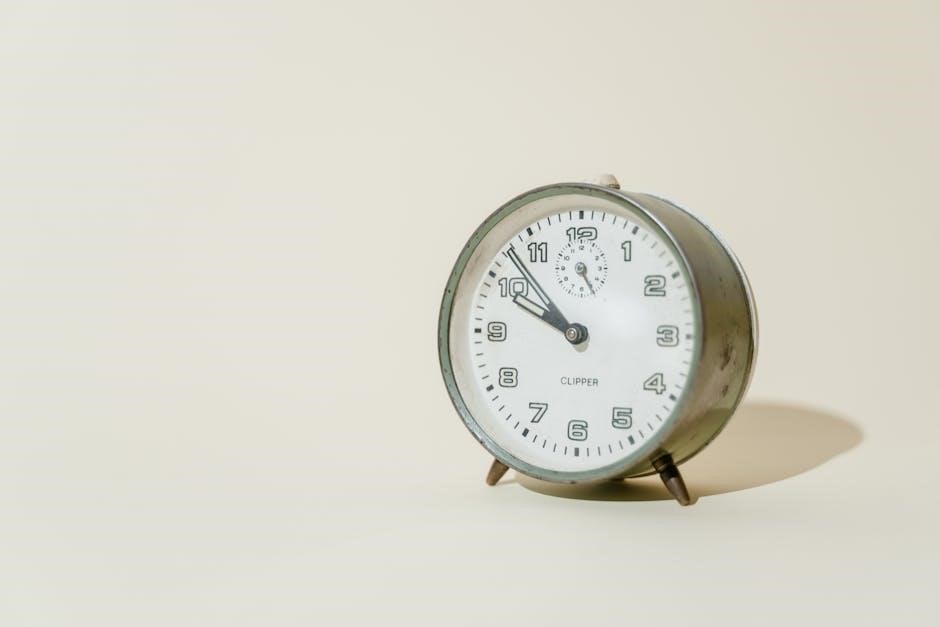
The Smiggle alarm clock’s PDF manual is crucial for understanding how to toggle between 12-hour and 24-hour time displays, as the process isn’t always intuitive. Many models require a specific button combination, often involving holding the ‘Mode’ button for an extended period.
Some users have reported difficulty changing this setting even after removing and replacing the batteries, highlighting the importance of the manual’s precise instructions. The manual will detail if a particular sequence of button presses is needed, or if the setting is buried within a menu accessed via the ‘Mode’ button.
Without the manual, experimentation can be frustrating. Refer to the diagrams within the PDF to identify the correct buttons and the proper timing for each press.
Setting the Alarm – A Practical Guide
Successfully setting the alarm on your Smiggle clock relies heavily on consulting the official PDF manual. The ‘Alarm’ button is central to this process, but its functionality varies between models. The manual provides a visual guide to the button layout and a step-by-step explanation of the alarm-setting procedure.
Typically, you’ll need to press and hold the ‘Alarm’ button to enter alarm setting mode. Then, use the ‘Mode’ button to cycle through hour and minute settings, adjusting the time with other buttons. The PDF will clarify which buttons control these adjustments.
Ensure you confirm the alarm is activated – often indicated by an alarm symbol on the display. Without the manual, determining the correct sequence and button functions can be challenging, leading to a silent wake-up call!
Adjusting Alarm Volume
Controlling the alarm’s loudness on your Smiggle clock is often model-specific, and the PDF manual is your primary resource. Unfortunately, information regarding volume adjustment isn’t widely detailed online outside of the manual itself. Many users report difficulty finding volume controls without referencing the official documentation.
The manual will illustrate whether dedicated volume buttons exist, or if volume is adjusted through a combination of pressing and holding the ‘Alarm’ or ‘Mode’ buttons. Some models may have multiple volume levels, while others offer a simple high/low setting.
Without the PDF, experimentation can be frustrating. It’s crucial to consult the manual to avoid accidentally disabling the alarm entirely while attempting to adjust the volume. A clear understanding of your specific model’s controls is essential.
Troubleshooting Common Issues
When facing problems with your Smiggle alarm clock, the official PDF manual is invaluable. Common issues reported online, like incorrect time displays or alarms failing to sound, often have solutions detailed within the manual’s troubleshooting section.
Users on platforms like Fixya have encountered scenarios where the clock retains incorrect time even after battery removal and button presses. The manual provides specific reset procedures for these situations. Similarly, unresponsive buttons are addressed with guidance on potential causes and fixes.
A dim or blank display usually indicates low batteries, but the manual may offer further diagnostic steps. Remember, the PDF is tailored to your specific model, offering the most accurate and effective troubleshooting advice.
Clock Not Displaying Correct Time
If your Smiggle alarm clock shows the wrong time, the first step is consulting the official PDF manual. Many users, as noted on Fixya, have struggled with this issue, even after attempting basic adjustments using the ‘Mode’ button.
The manual outlines the correct sequence for setting the time, differentiating between 12-hour and 24-hour formats. It may also detail a reset procedure if the clock stubbornly displays an incorrect time. Some models require a specific button combination to re-synchronize the timekeeping mechanism.
Ensure batteries are fresh, as low power can cause timing inaccuracies. The PDF manual will specify the correct battery type and replacement instructions. If the problem persists, the manual’s troubleshooting section offers further guidance tailored to your clock’s model.
Alarm Not Sounding
When your Smiggle alarm clock fails to sound, the PDF manual is your primary resource. Users on Fixya have reported this issue, often after attempting to set or disable the alarm. The manual details the precise steps for activating the alarm function, including confirming the correct time and alarm mode.
Verify the alarm volume isn’t set to minimum or muted. The manual illustrates how to adjust the volume using dedicated buttons or through a menu system. Check if the alarm is accidentally switched off; some models require pressing the ‘Alarm’ button to re-enable it.
Low battery power can also prevent the alarm from functioning. Replace the batteries and consult the manual for the correct type. If the problem continues, the manual’s troubleshooting section may offer model-specific solutions.
Buttons Not Responding
If the buttons on your Smiggle alarm clock become unresponsive, the official PDF manual suggests several troubleshooting steps. A common cause is low battery power; replacing the batteries is the first recommended action. The manual details the correct battery type for your specific model.
Occasionally, a temporary system glitch can cause this issue. The manual may advise a reset procedure – often involving battery removal for a short period. Ensure your fingers are dry when pressing buttons, as moisture can interfere with functionality.
If the problem persists, consult the manual’s troubleshooting section for model-specific guidance. It might indicate a potential hardware fault requiring further assistance. Remember to refer to the button layout diagram within the PDF to confirm you’re pressing the correct controls.
Display Dim or Blank
A dim or blank display on your Smiggle alarm clock is frequently addressed within the official PDF manual. The primary cause is often related to battery levels; a low charge can significantly reduce display brightness or cause it to go completely blank. Replacing the batteries with fresh ones is the initial troubleshooting step.

The manual also details the ‘Light’ button functionality, which controls display illumination. Ensure this button hasn’t been accidentally deactivated. Some models feature adjustable brightness settings, outlined in the PDF, allowing you to increase visibility.
If the display remains dim even with new batteries and the light activated, the manual may suggest a reset. If these steps fail, consult the manual for potential hardware issues and warranty information.
Battery Replacement & Power Sources
The Smiggle alarm clock PDF manual provides crucial details regarding battery replacement and power sources. Most models operate primarily on batteries, typically AA or AAA, as specified within the manual’s specifications section. It’s vital to use the correct battery type to avoid damage.
The manual illustrates the battery compartment location and provides step-by-step instructions for safe battery insertion and removal. Some Smiggle clocks may also offer an optional DC power adapter input, allowing for continuous operation without batteries. The manual details the adapter’s voltage and amperage requirements.
Always refer to the manual for guidance on battery life expectancy and proper disposal methods. Using high-quality batteries is recommended for optimal performance and longevity.
Smiggle Clock Reset Procedures
The Smiggle alarm clock PDF manual outlines specific reset procedures, often necessary when encountering unresponsive buttons or display errors. A soft reset, typically involving battery removal for a short period (around 30 seconds), is the first recommended step. This clears temporary memory without affecting saved settings.
For more persistent issues, the manual may detail a factory reset option, usually accessed through a specific button combination held down during power-on. Caution: a factory reset will erase all custom settings, returning the clock to its original state.
The manual emphasizes the importance of following these procedures precisely to avoid potential damage. If a reset doesn’t resolve the problem, the manual directs users to alternative support resources, including Smiggle’s customer service channels.
Downloading & Viewing the PDF Manual
Accessing the Smiggle alarm clock’s PDF manual is crucial for understanding its features and troubleshooting issues. While a direct download link isn’t universally provided, resources like Fixya consistently mention its availability; Users often find the manual by searching online for “Smiggle alarm clock instructions PDF” along with their specific model number, if known.
The manual is typically a multi-page document detailing button functions, time setting, alarm configuration, and reset procedures. It often includes visual diagrams of the clock’s buttons for clarity.
Once downloaded, the PDF can be viewed using any standard PDF reader, such as Adobe Acrobat Reader, which is freely available. Ensure your PDF reader is up-to-date for optimal viewing and functionality.
Alternative Resources for Support
Beyond the official PDF manual, several online platforms offer support for Smiggle alarm clocks. Fixya serves as a community forum where users share solutions and ask questions regarding clock functionality, including time setting and alarm issues. RhettandLinKommunity also provides a space for discussion and troubleshooting.
However, it’s important to note that responses on these platforms are user-generated and may vary in accuracy. Searching YouTube for “Smiggle projector clock instructions” can sometimes yield helpful video tutorials, though availability is limited.
Consider checking Smiggle’s official website for a FAQ section or contact information for customer support. While direct assistance may not always be readily available, it’s a valuable resource to explore.
Frequently Asked Questions (FAQ)
Q: Where can I find the Smiggle alarm clock manual? A: The official instructions are typically available as a PDF document, often referenced in online support forums like Fixya and RhettandLinKommunity.
Q: Can I change the time format to 12-hour? A: Users have reported difficulty changing the time format, even after attempting to use the ‘Mode’ button and removing batteries. The PDF manual is crucial for specific steps.
Q: My alarm isn’t sounding, what should I do? A: Ensure the alarm is properly set and the volume isn’t muted. Consult the manual for detailed alarm setting procedures.
Q: Is there video support available? A: Limited video tutorials exist on platforms like YouTube, but their availability varies.
Smiggle Warranty Information (Related to Clocks)
Smiggle’s warranty coverage for alarm clocks isn’t explicitly detailed in the resources referencing the PDF manual, like Fixya or RhettandLinKommunity. However, standard Smiggle product warranties generally apply, covering manufacturing defects for a specified period from the purchase date.
To initiate a warranty claim, retain your proof of purchase (receipt) and contact Smiggle’s customer support. The PDF manual itself doesn’t contain warranty details; it focuses on operational instructions.
Warranty claims typically require returning the defective clock for assessment. Note that damage caused by misuse, accidental damage, or normal wear and tear may not be covered. Always check Smiggle’s official website for the most current warranty policies.
Further details can be found on their official website.
Safety Precautions & Warnings
While the Smiggle alarm clock PDF manual primarily focuses on operational instructions, general safety precautions should always be observed. Do not disassemble the clock, as this could lead to electrical shock or damage. Keep the clock away from excessive moisture or extreme temperatures.

Battery safety is crucial; always insert batteries with the correct polarity (+/-). Remove batteries if the clock will not be used for an extended period to prevent leakage. Dispose of used batteries responsibly, following local regulations.
This device is not a toy and should be kept out of reach of very young children. Avoid dropping the clock, as this could damage the internal components. If the clock malfunctions, do not attempt to repair it yourself; contact Smiggle customer support.
Always follow these guidelines.